If you have spent any time around sports cards, you have probably heard people talk about sports card grading. Whether at a show, online, or digging through collections, understanding how sports card grading works can make a big difference in how you buy, sell, and evaluate cards.
Sports card grading is the process of having a third-party company evaluate a card’s condition and authenticity. Once graded, the card is sealed in a protective case, often called a slab, with a numerical score. This helps collectors and buyers understand exactly what they are getting and adds a level of trust when buying or selling.
Table of Contents
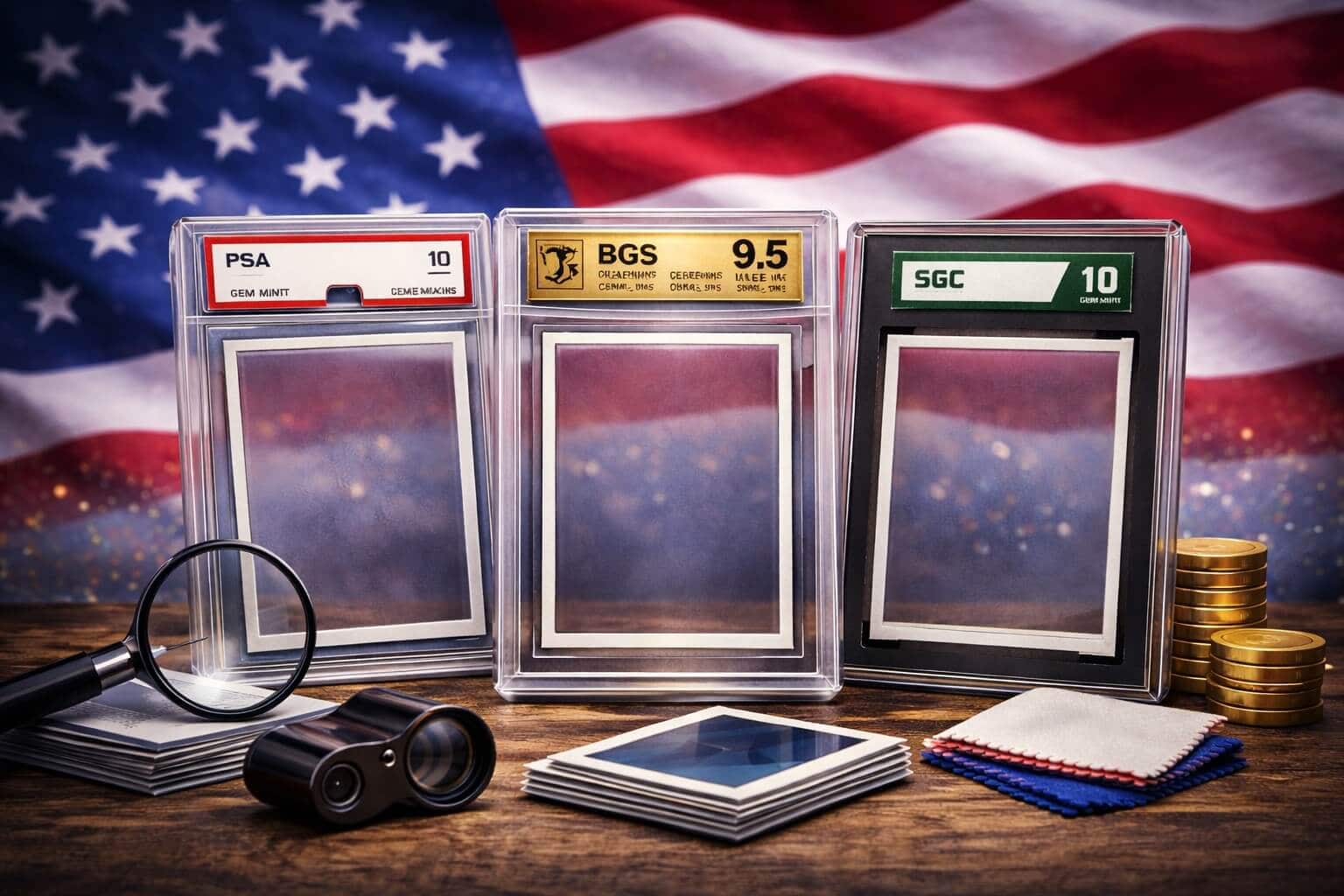
The three most recognized card grading companies in the hobby today are PSA, BGS, and SGC.
PSA, or Professional Sports Authenticator, is the most widely used and often brings the highest resale value. Their grading scale runs from 1 to 10, with a PSA 10 considered Gem Mint. PSA slabs are clean and consistent, which makes them especially popular with collectors and investors.
BGS, or Beckett Grading Services, is known for its subgrades, including centering, corners, edges, and surface, which give a more detailed breakdown of a card’s condition. A BGS 9.5 is considered Gem Mint, and a BGS 10, especially a Black Label, is extremely rare and valuable.
SGC, or Sportscard Guaranty Company, has been around for decades and is especially respected in vintage cards. Their black insert slabs have a distinct look, and they have become increasingly popular due to faster turnaround times and consistent grading.
One of the biggest benefits of sports card grading is authentication. A graded card has been reviewed by professionals to confirm it is genuine, which is especially important with high-value or vintage cards where counterfeit cards exist.
Quick Comparison: PSA vs BGS vs SGC
- PSA (Professional Sports Authenticator)
- Grading scale: 1 to 10
- Best for: resale value and liquidity
- Most widely recognized in the hobby
- Clean, simple slab design
- BGS (Beckett Grading Services)
- Grading scale: 1 to 10 with subgrades
- Subgrades include centering, corners, edges, surface
- Black Label 10 is one of the most valuable grades in the hobby
- Preferred by collectors who want detailed condition breakdowns
- SGC (Sportscard Guaranty Company)
- Grading scale: 1 to 10
- Strong reputation in vintage cards
- Faster turnaround times compared to competitors
- Distinct black insert slab design
That said, there are a few common misconceptions worth clearing up.
First, not all graded sports cards are automatically valuable. The grade matters. A low-grade card may still be authentic but could have significant wear, which impacts value in sports card grading.
Second, raw, or ungraded, cards are not necessarily fake. Many collectors choose not to grade cards, especially if the cost outweighs the potential value.
Third, sports card grading is not 100 percent perfect. While PSA, BGS, and SGC are highly trusted, grading still involves human evaluation, and slight variations can happen.
And finally, just because a card looks perfect does not mean it will receive a perfect grade. Centering, surface issues, and even tiny imperfections can impact the final score.
What Graders Look For
- Centering: How evenly the image is positioned on the card
- Corners: Sharpness and wear on each corner
- Edges: Cleanliness and condition of the card edges
- Surface: Scratches, print defects, or other imperfections
Should You Grade Your Card?
Not every card should be submitted for sports card grading.
Start with value. If the card would only be worth a small amount even after grading, it may not be worth the cost. If a higher grade could significantly increase value, it is worth considering.
Next is condition. Check centering, corners, edges, and surface closely. Small flaws can lower the grade more than expected.
Rarity and demand also play a role. Vintage cards, star players, and popular sets are often stronger candidates for sports card grading.
Finally, consider your goal. Whether you are looking to sell, protect, or simply collect will help determine if grading makes sense.
Explore Graded Cards and Learn More
If you are interested in graded sports cards, you can browse available inventory directly on our site. We regularly feature a mix of vintage and modern cards, including graded examples from PSA, BGS, and SGC.
Have questions about grading, authenticity, or whether a card is worth submitting? We are always happy to help. Whether you are new to collecting or have been in the hobby for years, getting a second opinion can make a big difference.
- Questions about grading or card condition
- Looking to sell part of your collection
- Interested in purchasing a specific player or card
- Want to know what inventory we currently have in stock
You can reach out anytime through our contact page and we will get back to you.