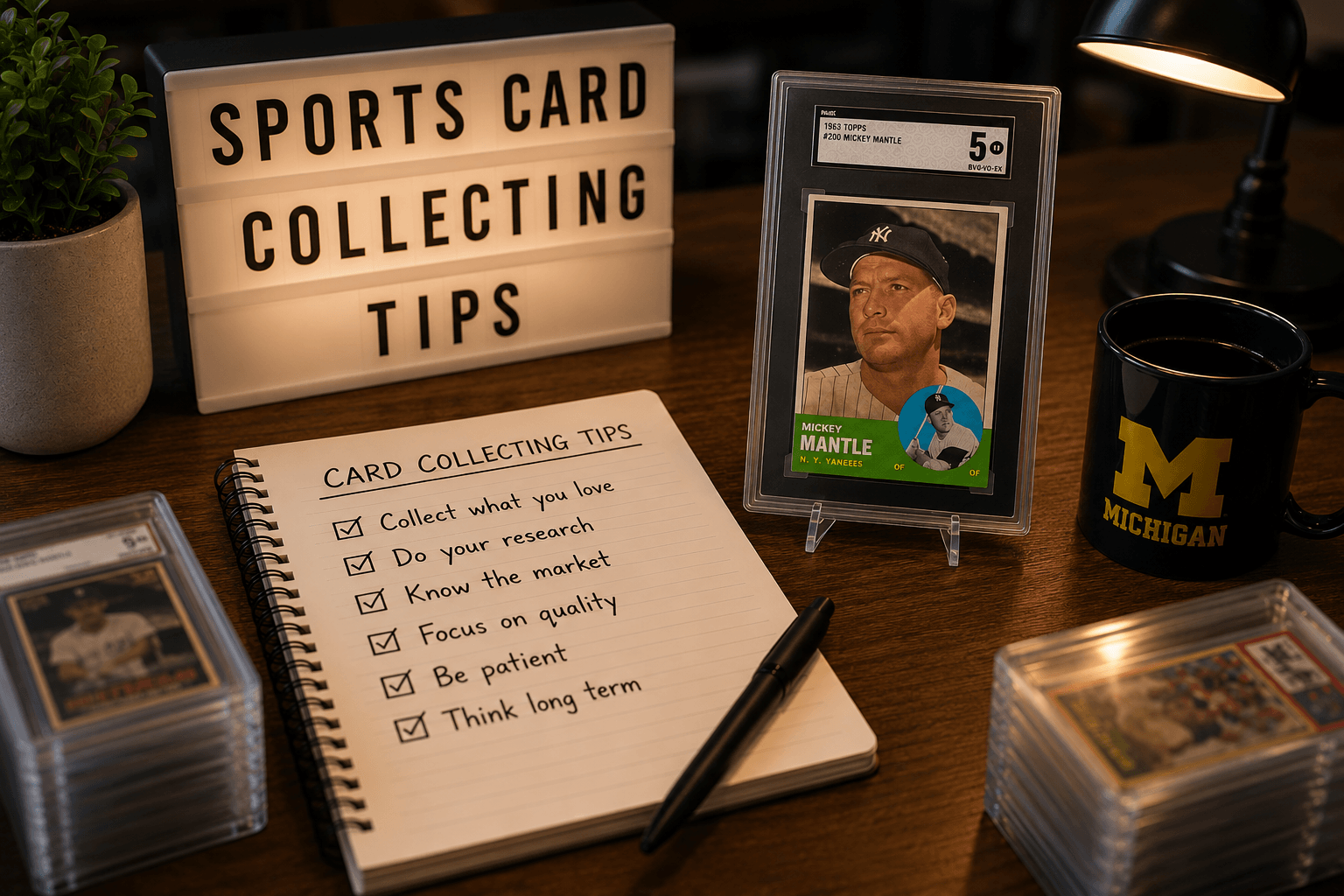
Sports card collecting tips are valuable whether you are just getting started or have been building a collection for years. Some collectors focus on vintage baseball cards. Others collect rookie cards, graded sports cards, Hall of Fame players, favorite teams, universities, or specific sets.
According to Bob Linman of Red Cedar Sports Cards & Collectibles, one of the best ways to approach the hobby is to choose a sport, team, player, era, or category you genuinely enjoy and understand.
Bob has been involved in the sports card hobby for more than 40 years. He is also a longtime University of Michigan fan and season ticket holder, which reflects one of his biggest pieces of card collecting advice: collect around what you love, know, and enjoy following over time.
Table of Contents
Sports Card Collecting Tips: Start with a Sport, Team, or Category You Enjoy
When learning how to collect sports cards or refine an existing collection, Bob recommends starting with a sport, player, team, university, era, or category that already means something to you.
For some collectors, that might mean building around a favorite college program like the University of Michigan. For others, it could mean collecting vintage baseball cards, modern basketball rookies, football Hall of Fame cards, graded cards, pre-war cards, or cards connected to a favorite professional team.
Having a basic knowledge of what you collect helps you make better decisions. It also makes the hobby more meaningful. A collection built around your personal interests is often more enjoyable than one built only around short-term trends.
Be Patient and Avoid Early Hype
In the sports card world, prices can change quickly. Player performance, team success, injuries, awards, media attention, and market excitement can all influence sports card values.
Because of that, Bob encourages collectors to be patient. Early hype can be exciting, but not every hot player or trending card holds long-term value.
Sports card collecting is not just about chasing the next big name. For many collectors, it becomes a lifelong hobby built around knowledge, timing, relationships, and enjoyment.
Do Your Research Before Buying or Selling
Before buying any card, take time to understand what you are looking at. Research the player, set, year, card condition, grading company, recent sales, and long-term interest in that card or category.
The same is true when selling sports cards. Bob recommends researching the current sold price of your cards before making a decision. There are several online tools and marketplaces that can help show recent sales activity and current market value.
When Bob evaluates cards, he often uses resources like eBay sold listings and Card Ladder to scan or research cards and compare current sale prices. This helps him better understand what similar cards are actually selling for, not just what someone is asking.
Some sports card values can change monthly, especially for active players, trending rookies, or cards connected to major sports moments. That is why current sales data matters when buying, selling, or evaluating a collection.
This is especially important when buying available sports card inventory, vintage sports cards, graded sports cards, rookie cards, or higher-value pieces.
The more informed you are, the more confident you can be in your collecting decisions.
Fair Pricing Matters
For Bob, research is not just about finding the lowest price or the highest possible resale number. It is about understanding the market and working toward a fair price.
When buying sports card collections or individual cards, Bob wants sellers to feel informed and treated fairly. Current sold prices, card condition, grading, scarcity, and collector demand all play a role in determining value.
If you are thinking about selling part of a collection, a larger sports card collection, or vintage cards you inherited, it helps to work with someone who understands the hobby and takes time to evaluate the cards carefully.
Think Long Term
Bob has been involved in the hobby for more than four decades. In that time, he has seen strong markets, slower markets, rising stars, fading trends, and renewed interest in classic cards.
His long-term card collecting advice is to avoid making decisions based only on short-term excitement. Look for quality, understand what you are buying, and collect in a way that makes sense for your goals.
Some collectors want investment-grade cards. Some want a personal collection they can enjoy for years. Others want to buy sports cards connected to favorite memories, teams, universities, or players. All of those paths can be meaningful when approached thoughtfully.
These sports card collecting tips are not about chasing every trend or buying every hot card. They are about building a collection with patience, research, and a clear understanding of what you enjoy collecting. Collectors who take a long-term approach often find the hobby more rewarding and sustainable over time.
Collecting Should Be Enjoyable
Most importantly, card collecting should be enjoyable. Whether you are building a Hall of Fame collection, searching for vintage sports cards for sale, adding graded baseball cards to your collection, or looking for a specific player, the hobby should still be fun.
Bob enjoys working with collectors of all experience levels and helping them make informed decisions. Whether you are buying, selling, trading, or simply learning more about the sports card hobby, good advice and honest guidance can make a big difference.
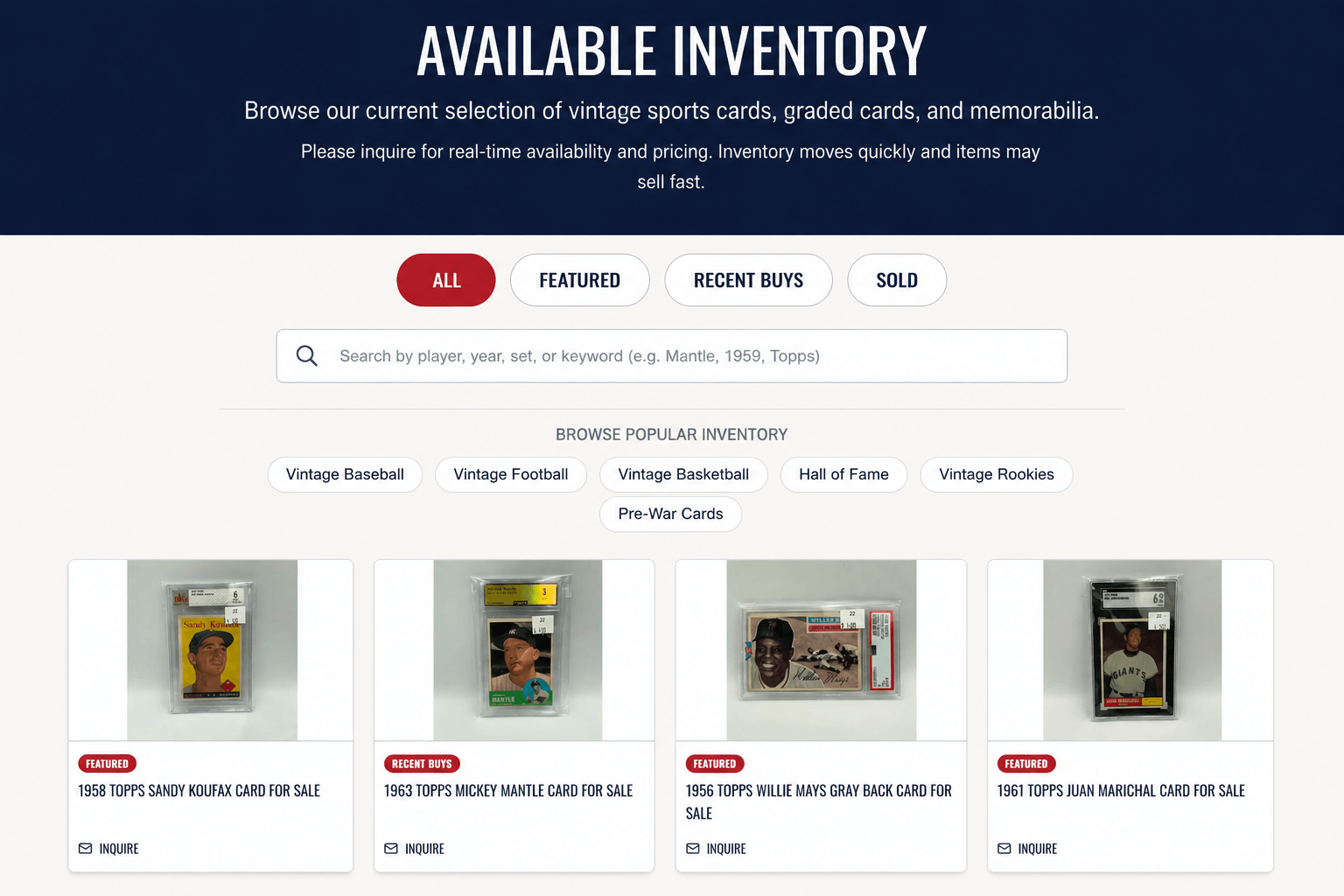
If you are looking for collector-focused inventory, Red Cedar Sports regularly features vintage sports cards, graded cards, Hall of Fame inventory, rookie cards, and unique pieces from across the hobby.
Interested in available inventory or thinking about selling a collection? Browse the Red Cedar Sports inventory, learn more about how to sell your sports cards, or contact Bob with questions about specific cards, collections, or upcoming availability.
Related Red Cedar Sports resources: